Debt is often seen as something negative. Many people believe that all debt is bad and should be avoided at all costs. While it is true that debt can cause serious financial problems, not all debt is harmful. Some types of debt can actually help you improve your financial situation when used wisely.
Understanding the difference between good debt and bad debt is essential for smart money management. When you know which debt helps you grow and which debt holds you back, you can make better financial decisions and avoid long-term stress.
This guide explains good debt and bad debt in simple language and shows you how to use debt responsibly.
What Is Debt?
Debt is money you borrow with the promise to repay it later, usually with interest. Loans, credit cards, and other forms of borrowing are all types of debt.
Debt itself is not the problem. The problem is how and why the debt is used.
Used wisely, debt can support growth. Used carelessly, it can destroy financial stability.
Why Understanding Debt Matters
Many people fall into financial trouble because they do not understand debt.
They borrow without thinking about interest, repayment ability, or long-term impact. Over time, debt grows and becomes difficult to manage.
Understanding the difference between good and bad debt helps you:
Avoid unnecessary borrowing
Reduce financial stress
Build wealth responsibly
Make smarter long-term decisions
Knowledge is your best protection against debt problems.
What Is Good Debt?
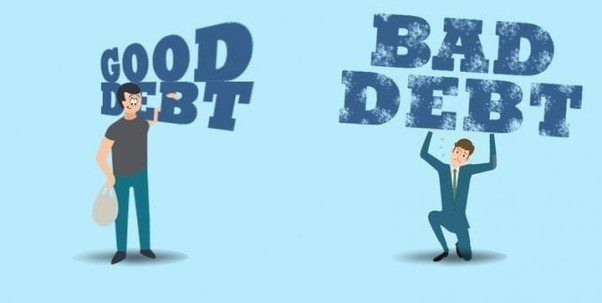
Good debt is borrowing that helps improve your financial future.
It is usually associated with growth, income potential, or long-term value. Good debt supports your ability to earn more or build assets over time.
Good debt often has lower interest rates and flexible repayment terms.
The key feature of good debt is that it adds value to your life or finances.
Examples of Good Debt
Education-related debt is often considered good debt when it improves skills and earning potential.
Home-related debt can be good when it helps you own a property that provides stability or long-term value.
Business-related debt can be good if it helps generate income or expand operations.
Good debt usually contributes to growth rather than consumption.
Why Good Debt Can Be Helpful
Good debt can accelerate progress that would otherwise take many years.
For example, education debt may increase income potential faster than saving first. Home debt can provide stability instead of long-term renting.
When used responsibly, good debt can help you move forward financially.
However, even good debt becomes bad if mismanaged.
What Is Bad Debt?
Bad debt is borrowing used for consumption or lifestyle spending that does not create long-term value.
This type of debt usually comes with high interest rates and does not improve income or assets.
Bad debt drains future income and creates financial stress.
The biggest problem with bad debt is that it provides short-term satisfaction at long-term cost.
Examples of Bad Debt
Credit card debt for shopping, dining, or entertainment is a common example of bad debt.
High-interest personal loans used for lifestyle spending fall into this category.
Buy-now-pay-later schemes often encourage overspending and lead to unnecessary debt.
Bad debt is usually expensive and hard to escape.
Interest Rates: A Key Difference
Interest rate plays a major role in determining whether debt is good or bad.
Good debt usually has lower interest rates and longer repayment periods.
Bad debt often has high interest rates that increase total repayment significantly.
High interest turns even small loans into long-term burdens.
Purpose of Debt Matters More Than Type
The purpose of borrowing matters more than the label.
Even education or home debt becomes bad if borrowed irresponsibly or beyond your ability to repay.
Similarly, some personal loans may be useful in genuine emergencies.
Debt should always be evaluated based on purpose, cost, and impact.
How Bad Debt Keeps People Stuck
Bad debt traps people in cycles of repayment.
Monthly payments reduce cash flow. Interest increases balances. Stress grows.
Over time, people delay saving, investing, and planning for the future.
Breaking free from bad debt often requires discipline and sacrifice.
Signs You Are Taking on Bad Debt
Some warning signs indicate unhealthy borrowing.
Using credit for daily living
Paying only minimum amounts
Borrowing without a repayment plan
Feeling stressed about payments
Recognizing these signs early helps prevent bigger problems.
How to Use Good Debt Responsibly
Even good debt requires careful planning.
Borrow only what you can afford to repay comfortably. Understand interest rates and total cost. Plan repayments before borrowing.
Never assume future income will solve repayment problems.
Responsible borrowing turns debt into a useful tool instead of a burden.
How to Avoid Bad Debt Completely
Avoiding bad debt starts with discipline.
Spend within your income. Build emergency savings. Delay unnecessary purchases.
If you cannot afford something without borrowing, reconsider the purchase.
Patience protects your financial future.
Managing Existing Bad Debt
If you already have bad debt, focus on reducing it steadily.
Stop adding new debt. Pay more than minimum amounts. Prioritize high-interest balances.
Reducing bad debt frees money and improves peace of mind.
Progress may feel slow, but every payment helps.
When Debt Becomes Dangerous
Debt becomes dangerous when it consumes too much income.
If debt payments prevent you from saving or covering basic expenses, it is a serious problem.
Ignoring dangerous debt can lead to long-term financial damage.
Early action prevents long-term regret.
Debt and Financial Freedom
Financial freedom is difficult with heavy bad debt.
Interest payments steal future income and limit choices.
Reducing bad debt increases flexibility and control.
Good debt, when managed well, can support long-term freedom.
Building a Balanced Debt Strategy
A balanced approach to debt includes:
Using good debt carefully
Avoiding bad debt completely
Paying off high-interest debt first
Maintaining emergency savings
Balance protects stability and growth.
Common Myths About Debt
Many myths confuse people.
All debt is bad
Debt is unavoidable
Borrowing more solves problems
High income fixes debt issues
Understanding reality helps avoid mistakes.
Debt Decisions Should Be Intentional
Debt should never be taken casually.
Every borrowing decision should be intentional, planned, and evaluated.
Ask yourself if the debt improves your future or hurts it.
Intentional decisions lead to better outcomes.
Learn From Past Debt Mistakes
Many people learn about debt through experience.
Instead of repeating mistakes, learn from them.
Past debt problems can become valuable lessons.
Awareness prevents repetition.
Debt Is a Tool, Not a Lifestyle
Debt should support progress, not fund lifestyle.
Using debt to appear successful often leads to financial stress.
True financial success is built quietly through discipline.
Lifestyle funded by debt is temporary.
Final Thoughts
Debt itself is not good or bad. How you use it determines the outcome.
Good debt supports growth and long-term value. Bad debt creates stress and delays progress.
Understanding the difference helps you borrow wisely and avoid financial traps.
Use debt carefully. Avoid high-interest lifestyle debt. Focus on long-term benefits.
When debt is managed correctly, it becomes a tool. When misused, it becomes a burden.
Choose wisely, and your financial future will thank you.